Showing posts with label tactile defensiveness. Show all posts

Friday, 6 January 2017

Why should we use Visual Support System?


Many children with ASD, ADHD, SPD respond positively to schedule charts, sign posters, and other visual strategies. This form of information presentation encourages them to communicate appropriately and helps to develop language and process information. Thus, it helps them to be more independent and self-confident to verbalise or make other understand their own feelings.


Visual strategies can be purposeful for expressing and understanding feelings and emotions, while going through transitions or changes, visiting a new place or meeting a new person.
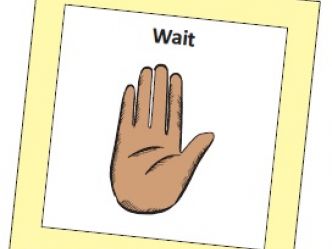
A visual schedule is a representation of what is going to happen throughout the day or within a task or activity. It helps in carrying out life skills activities or task in hand in a planned manner and reduces high levels of anxiety 

It encourages structure and organisation in daily routine.

It can be in form of timetables, behavioural sheets, safety charts, activity sequencing for self-care skills (example-tooth brushing) or independent living skills (driving, sex education), emotion’s chart, social skills, instructions or reminders.

Marlene J. Cohen and Donna Sloan are authors of book Visual Supports for People with Autism: A Guide for Parents and Professionals (2007) which highlights the significance of visual support strategies for children and adults with autism.

Children with ASD often display anxious behaviours or act out when their routines change or they are in unfamiliar situations. Visual reminders can support them understand what to expect and what will happen next to reduce the anxiety. They help them to pay attention to details and understand situation visually in a better manner.

One of the main problems of people having ASD is social interaction, using language and repetitive behaviours. They have difficulties understanding instructions and display limited interests in activities. A visual support system helps in countless areas helping the child to work systematically and rationally.

Finally, some children with ASD are anxious or act out when their routines change or they are in unfamiliar situations. Visuals can help them understand what to expect and will happen next and also reduce anxiety. Visuals can help them pay attention to important details and help them cope with change.


Often ASD children get anxious due to changes in routine, classroom schedule, while meeting new people, and in unfamiliar situations. Visual support strategies can help them understand what to expect and when will it happen. Rather than getting panicked, agitated, angry, and anxious these children can look into the picture cards, or visual charts and follow the plan.


Moreover, parents’ teachers can easily communicate with them using visual reminders. This decreases frustration and may help decrease problem behaviours that result from difficulty communicating. Visuals can promote appropriate, positive ways to communicate.

The visual schedule breaks down the activity into multiple steps so that child can understand, plan and execute the task easily and complete the task (e.g. life-skill, such as brushing, shoe lace tying) successfully with reduced anxiety levels. According to Zigmond et. al (1999), anxiety caused by any reasons can aggravate sensory defensiveness in children with sensory modulation difficulties. Therefore, to minimise the sensory issues, caused due to raised levels of anxiety and stress visual reminders can be a helpful tool to a great extent.

Furthermore, anxiety resulting due to lack of information or fear of unfounded apprehension results in concentration difficulties, restlessness, hyperactivity, distractibility as well as learning abilities.

The manifestation of anxiety has been found to be associated with complex brain structure, known as limbic system and components of the reticular system.
It is better to have a portable schedule such as on a clipboard or a   binder or it can be fixed to a permanent place such as child’s bedroom or washroom wall or refrigerator. 

Fundamentally, the schedule should be visible to a child frequently and easily so that he can access it before or while performing planned task. Initially, verbal cues such as “check your schedule” can be prompted if a child gets baffled to perform any task.


Resources for Using Visual Supports: 

www.do2learn.com 
card.ufl.edu/content/visual.html
www.kidaccess.com/index.html 
Eckenrode, L., Fennell, P., & Hearsey, K. (2004). Tasks Galore for the Real World. Raleigh, NC: Tasks Galore. 


References:

Autism Speaks (www.autismspeaks.org/)

National Autistic Society (http://www.autism.org.uk/)

Bernard-Opitz, V, and Häußler, A. (2011) Visual support for children with autism spectrum disorders: materials for visual learners. Shawnee Mission, Kansas: AAPC Publishing  Bondy, A. and Frost, L. (2011).

A picture’s worth: PECS and other visual communication strategies in autism. 2nd ed. Bethesda, Maryland: Woodbine House  Cohen, M.J. and Sloan, D. L. (2008) Visual supports for people with autism: a guide for parents and professionals. Bethesda, Maryland: Woodbine House


Saturday, 7 May 2016

Strategies for Tactile Defensiveness!


Touch is the first sensation that starts developing in the womb at five weeks. Some children react adversely, negatively or display  escape-like behaviour on being touched, hugged or kissed since they have difficulties in processing sensory information due to the poor tactile system. This behaviour is referred as Tactile Defensiveness.

Due to the inaccurate functioning of touch mechanism and neural system, these children are often in the state of 'red alert'. They may react by clinging or complaining (fright) to someone, or lashing out (fight) and running away (flight).

Often children displaying tactile defensiveness may also have self-stimulating behaviourRepeated movements such as hand flapping, body rocking, hand gazing, spinning have been found prevalent in children with developmental disabilities and Autism.

Research done by Feig et al (2012), concludes that there is a significant relationship between Tactile defensiveness and Self-stimulatory behaviours.They both are problematic as they appear and interfere in child's day-to-day activities. For example, a child who engages in hand flapping may not be able to do any other activity such as washing herself or eating on her own. Likewise, due to tactile defensiveness doing teeth-brushing or other self-care activities will be difficult.


Here are some of the suggestions for tactile defensiveness which may or may not be helpful, as each child is different, however making appropriate changes within child’s environment or strategies according to his needs and priorities can support him to live better and stay calmer.


A) Understand your child: (Address child's issues seriously= Trustworthy relationship + better behaved child)

Most importantly, it is parent’s responsibility to understand their child and her problems. Giving labels such as she has "bad behaviour" or "poor "attitude will not solve the issue. 
If she says “something always hurts me” or gets irritated due to scratching herself all the time, do not think she is pretending to gain empathy or purposefully trying to seek attention. 
There must be something unusual happening causing her to behave in this manner. 
Developing trust and developing an understanding of child's difficulties are essential parts of combating any problem. 
It will be great if parent and child both stay on the same team as good team players to resolve the issue rather than opponents where parents label the child for being anti-social frequently, and child reacts impulsively and aggressively on hearing those words over and again. 

B) Deep Pressure: (Leads to release of Dopamine or "happy neurotransmitter"= Calm brain & relaxed body)

Firm massage or deep pressure with pillows, cushions or rolling in a weighted blanket is very calming. Parents should understand signals when these strategies are needed. Children having sensitivities are overloaded with touch or noise in crowded places or parties. Parents should be aware of these situations and intervention should be provided before emotional or anger outbursts happens.Children get sleep disturbances caused due to sensory issues.Using techniques like Wilbarger Brushing Protocol  has been found to be an effective way of calming child for better sleep.
This should be under the supervision of Occupational Therapist or consult child's OT before trying Brushing Technique.


C) Weighted Items: (Stimulates body joints & muscles = Improves self-regulation,modulation,stress and anxiety)

Wearing weighted blankets, vests, backpacks or hats can have the calming effect in the classroom as well as at home. Great range of weighted items is available on Amazon such as ankle weights, lap weights shoulder and neck weights. They help to calm down a child in the classroom as well as any other environment leading her to focus on the task and reduce distraction. Weighted blankets are very helpful in calming the child’s distractibility, emotional liability, and hyper activeness. Another very good resource is TFH, South Paw
T-Jackets have been found to be a good resource of calming down a child. They have been scientifically customised for providing deep pressure and calming effects. 


D) Safety: (Prevention is better than cure so TAKE-CARE of child!)

Children who are hypo-responsive or sensory seeking towards touch are unaware of bruises and injuries. They do not get pain sensation messages from brain centers due to which they are prone to injuries. They may display self-stimulating or self-injurious behaviours along with tactile defensiveness.The stereotyped behaviours are common among Autistic children. Most common form is motor patterns are hand flapping, body gazing or object manipulation. Temple (1992) in her study Calming Effects of Deep Touch Pressure in Patients with Autistic Disorder, College Students, and Animals has suggested that Tactile Defensiveness co-exists with Stereotypical behaviour in Autism .Sensory Modulation and regulation is an important function which does not work well in both hyper and hyposensitivity of touch.It is important to follow some hands-on strategies such as:

  • Use of sensory experiences :Such as trampoline jumping,obstacle course, running
  • Follow Routines and maintain structure: e.g., planning a week ahead
  • Communication: Understanding child's behaviour in anticipation, environment, emotional liability.
  • Visual Support: Emotion's chart, use of PECS.
  • Talk to GP about Medication.
  • Use Barriers such as using cushions or pillows if the child does head banging,or tie the cloth on his hand to reduce self-biting.
  • Use soft furniture.
  • Keep rooms safe, the child should not be able to lock himself in a room, windows should not be wide-open.
  • Keep sharp objects like knife, fork, scissors, razors out of reach of the child.


F) Fabrics: (Removal of unpleasant sensory input = Relief & physical comfort)

Pay attention to the different fabrics. Following tips may be helpful related to fabrics:-
  • Give preference to child's fabric or texture.Some children like to wear cotton and avoid woolens, synthetics or any other texture that might irritate them. 
  • Wearing skin fit clothing is preferable than loose clothing
  • Stick to seamless clothing. 
  • Liners and tags are always irritable making child impulsive and distracted easily. Removing or cutting tags is the simple solution for this. 
  • As far as footwear is concerned, it should be comfortable and slip on type. Fasteners are also the good option if he finds tying laces complicated.
  • Long sleeves are preferable than short arm sleeves. 
  • Do not force him to wear belts, waistbands if he doesn’t feel good about it.

H) Active Involvement: (Child knows himself better than anyone else)

Self-directed tactile experiences are more calming then done by anyone else. Therefore, encourage the child to perform activities himself rather than done passively, by anyone else for him, however, assistance or supervision may be needed for completing tasks. After bath let him rub himself or put lotion independently since he can judge well how much deep firm pressure will be calming for self. Make your own Play-Doh at home.

I) Classroom Strategies: (Favourable IEP = Better provisions = Better behaved child + raised self-esteem)
Let the child stand last in a row in school. Let him
sit alone if he gets distracted by other pupil’s touch. Talk to teachers and school management to create awareness about your child’s difficulties. Teachers should know what child is going through and why is he distracted multiple times or scratches himself during the lessons. They should allow the child to do wall pushes or chair pushes if he feels calming during break times. The child should also get movement breaks if the teacher allows.  This should be included in his IEP. http://www.additudemag.com/adhd/article/5894.html


J) Inform before touching: (Respect child's integrity)

Hugs, kisses or any other type of touch should be done with consent. Ask or inform him before touching the child. This reduces anxiety levels and arousal too.Touching without consent can create disruptive behaviour. To know more about cause and neuroscience of tactile defensiveness click here.

K) Heavy Work Activities (Proprioceptive Input): (Tactile + proprioceptive input = calming effects,reduced anxiety,disruptive behaviour)

Pushing and pulling heavy objects such as barrels, carts, large bean bags,
the pile of chairs or pushing another child on the swing. All this 
gives proprioceptive input!

These activities provide deep pressure to muscles, joints, ligaments and key points of the body (Shoulders, Pelvis, Hips) to a tactile defensive child. 
Moreover, giving movement breaks will support a child to concentrate better in studies, such as sending him to an office to handover papers or asking him to distribute assignments in the classroom. See Classroom strategies for more information.


Thursday, 14 April 2016

Tactile Defensiveness Vs Tactile Discrimination

Protective System (Dysfunction causes Tactile Defensiveness) 

Skin has an important function - protection. It acts as a physical barrier between us and the world. Our skin can feel too hot and cold sensations’ and respond accordingly, for example, on being pricked by a needle we are hurt and brain perceives pain sensation. For detailed description of Tactile Defensiveness click here

This system helps us in identifying light touch, crude touch, pain and
temperature which are protective in nature. When a needle is inserted in baby's buttocks for vaccination he feels uneasy and painful due to which he may cry aloud, this pain sensation happens due to protective touch system. Touch is the first sensation that starts developing in womb at five weeks. Protective system works phenomenally in a newborn, which helps him to react towards changes in temperature, come in contact with his or her mother and feel secure in her arms. It helps in sucking mother’s nipple to take the feed and feel her body’s warmth and cosiness. Due to this, children clasp fingers and toes when being touched.

When child tries to stand on his own feet however falls back due to lack of balance and postural control, he feels distressed and cries, since he feels pain in his buttocks or legs. The protective system supports child to sense the pain and discomfort. Similarly, dirty diapers make child uneasy and, colic pain (prominent from 0-6 Months) can cause too much of discomfort and distress.

Neuroscience Background:


According to A. Jean Ayres (1972), tactile defensiveness is the response that occurs, when Dorsal Column-Medial Lemniscus (DCML) Pathway fails to exert inhibitory influence over Anterolateral (AL) Pathway.This means that DCML system does not work properly and hence AL system predominates on it due to which child reacts adversely, negatively on being touched, hugged or kissed.
The child has difficulties in hair washing, tooth brushing and nail cutting or avoids being touched reflecting Tactile DefensivenessChild shows dislike towards parents or caregiver’s hugs, kisses or arm around the shoulder by either pushing or asking not to touch him.They don't like being messy or touching objects like glue, paints, shaving form or cream, shampoo, bubble bath.


Treatment Strategies:


Weighted Items: Wearing weighted vests, backpacks or hats can have calming effect in school. Great range of weighted items are available on Amazon such as ankle weights, lap weights shoulder and neck weights.

Heavy Work/Resistive activities: These activities have calming effect on brain. The muscles and ligaments work against the gravity proving deep-firm pressure to the body.

Brushing: Sensations received from clothes or their tags can be disrupting in nature. An Occupational Therapist (OT) may guide parents in administering the Wilbarger Brushing Protocol which reduces tactile defensiveness.It is designed a particular fashion to reduce tactile defenesivemess.The brushing is done in specific sequence at specific intervals throughout the day.  

Vibration: Vibrators can be useful around arms and legs however should be applied under supervision of Occupational Therapist who is Sensory Integration trained. It is another form of deep pressure that activates proprioceptors (receptors in muscles and ligaments). The adverse effects which will be immediately visible are dizziness, headache or nausea.
  

Tactile Discrimination System (Dysfunction causes Tactile Discrimination difficulties)


This system is fast, efficient and its development is essential for dextrous tasks and In-Hand-Manipulation. Discriminative system is associated with function of discrimination, such as exploring the world and differentiate between different types of touches such as type of texture, and size of object. For example, consider how easily we can differentiating between different size coins in our pocket without looking at them. Opening or closing the lid of jar or doing small buttons without actually looking at shirt are examples of Tactile Discrimination and in hand Manipulation. He might not react at all towards injuries, may have lack of body awareness. 
This system also responds to vibration, touch pressure and deep pressure
information. As the child achieves developmental milestones they also develop a sense of touch discrimination. As the child grows older his abilities of discriminating tools objects and toys improve gradually. 
In a normal developmental process, as the child grows and he develops fine motor skills ability to discriminate different fabrics (soft blanket or stuff toy and wooden surface), sizes (small and large Lego pieces) develop. They enjoy jumping on soft mattress bed rather than playing on the wooden floor with carpet. 
So if the child’s cluster of behaviours such as being accident prone, dropping things from hand, difficulties in managing buttons, zippers, laces and ties, difficulties in handwriting it may be considered that these activities are linked to dysfunction in tactile discrimination.


Neuroscience Background:

Discriminative system is associated with function of tactile discrimination such as detection of size, form, texture as well as movement across the skin as evidenced by Fisher and Bundy (1991). The dorsal column medial leminiscus (DCML) pathway and associated receptors are responsible to respond to stimuli transmitting vibratory, touch pressure, discriminatory and deep pressure information meaning for appropriate functioning of Discriminative system DCML system is responsible.
When there is damage in DCML pathway, the sensory feedback to higher brain centres (cortex) is interrupted leading to deterioration of coordinated fine motor abilities of child.  This can be evidenced with empirical research work done by Cohen (1999), who concluded that injury to DCML can lead to decreased sensory feedback to the cortex causing uncoordinated fine motor skills. Therefore, child has difficulties in carrying out fine motor activities such as doing laces, buttons, fastening zippers.


Thursday, 10 March 2016

Tactile Defensiveness Explained!


In the last post we discussed about sensory modulation and how it affects tactile system. The summary sheet gives the brief review of different characteristics of hypersensitivity, hyposensitivity and tactile discrimination. 

This post is all about Tactile Defensiveness explanation.

Hope it makes sense to readers!!

Tactile defensiveness means a sensory issue related to unusual sensations or heightened sensitivity when a person or child is being touched anywhere on his or her body. It is a tendency to react negatively and emotionally to touch sensations.

Let’s consider an example of lovely boy referred to me  for Occupational Therapy by a class teacher called as Jack (pseudonym). 
He is 6 years old and has got special needs. The reason for referral is functional difficulties in activities of daily living (ADL’s). The observations made about Jack stated that he is accident prone, drops things from his hands, dislikes hair being washed, or being touched in the face or unexpectedly, prefers standing last in the queue, misbehaves on being instructed, and cannot manage buttons, zippers, laces and ties. He is distractible and hyperactive (home /school environment) which makes his learning difficult. Moreover, he was very impulsive and aggressive on Fridays due to whole week fatigue. He is often in fight and flight mode on being touched or spoken about his behaviour.

Now from above mentioned observations regarding Jack’s behaviour what can be concluded?

Well, the child doesn’t behave well in the classroom or at home.

Is this behaviour due to his attention seeking behaviour or Sensory Sensitivities?

The answer is, Sensory!  It can be hypothesised that he has a disorder in tactile processing, showing tactile defensiveness and poor tactile discrimination characteristics.


Most of the times children with ADHD, Developmental Delay, Autism or Dyspraxia show tactile defensiveness in their behaviours and have difficulties in concentrating or paying attention to a particular topic. Their behaviour is antisocial, not because of their bad intentions but due to lack of parent’s and teacher’s understandings about child’s struggle caused by sensory sensitives. These children avoid touch interactions with other people often exhibiting hyperactive and distractible behaviour at home and classroom in an everyday situation.

Making sense of Sensory experiences, let's discuss another example, how would you feel if you are completely wet from top to bottom and you are not allowed to change clothes rather being asked to focus in a lecture fully. Definitely, you will be unfocused and distracted easily since your clothing is not comfortable. 

Furthermore, consider, no one understands your problem, rather the lecturer in lecture room instructs you to be attentive on the topic and stay calm without being distracted. That moment will be so frustrating for you which can lead you to misbehave or speak rudely with the lecturer.

The same issue happens with our sensory kids, they do not misbehave intentionally or on purpose, however, they are trapped by their own body sensitivities. It will be so wrong to reprimand a child who is vulnerable, frustrated and emotional due to his own sensory issues.

Usually, parents show great concern to Occupational Therapist (OT) regarding child's learning processes and behavioural issues. Mostly, they ask whether their child’s learning will be affected due to TD. 

The answer to this is NO! 

TD does not interfere in child’s learning process academically, socially and developmentally, however, it may cause discomfort leading to (emotional liability, distractibility) behavioural problems that can affect his learning to some extent. The emotionally child has to be given extra attention since TD sometimes makes emotions upset.

Due to tactile defensiveness,child’s In-Hand-Manipulation skills are affected means doing buttons, laces or ties can be difficult tasks.


Sensations received from clothes or their tags can be disrupting in nature. Child in classroom will not be able to focus however will constantly keep on scratching himself all over the body. Avoidance for getting hands messy or dirty in glue or finger paint. He may not like walking barefoot in grass or on sand. Fabrics such as synthetic wool or rough textured may cause discomfort He would like to stand last in a queue to avoid touch from other people and also does not like games such as Tag.

To understand physiology of this system in simple terms, consider that brain as an electric circuitry system which has numerous wires (neurons pathways and fibres) working together so that power supply (appropriate functioning & behaviours) can constantly run in the house. Now imagine, one-day power supply of partial house has stopped suddenly however, it is available in other half of house. 

Electrician is being called and mistakenly he reconnects wrong wires together which results in high voltage (hypersensitivity towards touch, hugs) and current over flow in half of house however no light supply (hypo-sensitivity towards touch, poor fine motor skills) in other half of house.

Since the pathways don’t send appropriate messages in required (correct) brain centres therefore child reacts adversely, negatively and shows escape-like behaviour on being touched, hugged or kissed.

Protective system is automatic reaction whereas discriminative system involves complex refinement in brain. Human body switches to which ever system is needed at the particular moment. Pain sensations activate protective touch system however deep pressure sensations activate discriminative touch system.


The child with TD will do too much of protection of himself so that he does not get any pain stimuli and therefore his discrimination activity will also be less.


Different intervention strategies include Deep firm pressure, Wilbarger's Brushing technique, vibration, heavy work activities, Wall or chair push-ups, swing play or therapy ball exercises for core strengthening.

There are no shortage of resources regarding Tactile Defensiveness,
Sensory integration Network
Sensory processing Disorder


To have a brief description about hypersensitivity (tactile defensiveness), hypersensitivity or Tactile discrimination refer to,
Sensory Modulation & Tactile dysfunction


Saturday, 5 March 2016

Sensory Modulation & Tactile dysfunction


Have you ever thought why do we optimise the volume of television or brightness of our laptops and iPhones while using them during day or night? Why does professional photographer optimise his camera lens before clicking the picture or why do we adjust regulator of the oven while baking a cake?

The answer is simple, to get the best outcomes of whatever we are doing!

Tuning televison sound is important to hear properly, whereas camera lens optimisation is essential to get better picture quality results.

The way we adjust our electronic gadgets to get better results and make our lives easier, similarly our brain registers and modulates (adjusts) sensory information received from outside world according to our body’s tolerance level and comfort zone. It optimises the received sensory input due to which we react to different sensations in an appropriate manner. 

For example, on being hugged or kissed by loved ones we feel pleasurable, the smell of good food makes us feel hungry and happy or looking at flowers or fishes helps us to calm down and feel joyful.

Children with developmental delays, ADHD, and ASD often demonstrate behaviours appearing hyposensitive at one time (example: lack of body awareness or auditory input, invading other’s space) to appearing hypersensitive at other time, (example: doesn’t like being touched or hugged, dislikes for messy activities, prefers to wear long sleeves and pants). The Same child can have hypersensitivity or hyposensitivity towards touch, taste, movement or auditory (hearing) stimuli or a combination of both hyper and hypo-sensitivity. 

This fluctuation of behaviour from one spectrum to another spectrum is defined as sensory modulation disorder.

So, what happens due to Sensory Modulation disorder?


Modulation can be defined as the capacity to regulate and organise sensory input in a graded and adaptive manner. In simple terms, sensory modulation allows our brain to regulate and attend important information coming from the external world and filter out irrelevant stimuli. It enables the brain to experience pleasurable and intolerant sensations.

Consider an example of day to day life, while travelling in a public transport (tube, train or bus) we are usually distracted by the aroma of strong perfume or deodorant of person who has just boarded a train and stood next to us. Our brain system gets distracted momentarily by the fragrance of deodorant, however, within a couple of minutes, it gets adapted to smell. This happens due to modulation ability of the nervous system, which allows brain to regulate, organize and adapt the sensory input. Regulating different sensory inputs is sometimes a great challenge for children with sensory issues.

In atypically developing children the registration and modulation of sensations do not happen habitually due to which they display disruptive behaviours frequently and face difficulties while performing simple or complex tasks.

For example, a child with sensory modulation disorder may be affected by the chirping of birds outside the classroom or humming noise made by bee or background environmental sounds such as construction or vehicle passing through. The reason is auditory (hearing) hypersensitivity towards sounds which are irrelevant for others.  It is commonly observed in the classroom, these children are distracted by bright lights and colours and complain of a headache by the end of a day. 
This happens due to visual (vision) hypersensitivity. The brain does not function well and has difficulty in modulating and regulating visual input appropriately for longer periods of time. Avoidance or dislike to messy play such as sand, water, paint is an example of tactile (touch) hypersensitivity. 
Some children like chewing shirts, collar, hair or fingers due to hyposensitivity of oral (mouth) sensory processing. Some children love running around, jumping and hopping all the time, due to hyposensitivity towards vestibular (movement) sensations.

The conclusion of above-mentioned examples is sensory modulation disorder.  Each child is different and has different sensory modulation issues, therefore, identification of modulation difficulties and their intervention varies from child to child.

Children’s ability to curb and regulate sensory inputs effectively is influenced due to which they display frequent behavioural disruptions and emotional liability too. Their motor planning ability, body awareness, academic learning, emotional security and social skills can also be affected due to modulation. Noticeable behavioural changes can include anxiety, anger or depression. Moreover, poor modulation results in disorganisation, impulsivity, hyperactivity, inattentiveness and lack of self-regulation within the classroom and home setting.

Discussing Tactile (Touch) sensory system dysfunction characteristics it can be categorised as Tactile hypersensitivity, Tactile hyposensitivity or Poor Tactile Perception and Discrimination.

Tactile Defensiveness/Hypersensitivity (Over-responsiveness):

In this condition, child reacts negatively or over-responds to a touch situation which
other children find non-threating and non-aversive (usual or normal). Their brain may not gait touch sensations, so they may be sent into fight or flight over very small, everyday touch sensations. A child will not like being hugged or touched by anyone unexpectedly. These children are often distracted and hyperactive or overly active since they respond to incoming irrelevant sensory input. They might be indifferent towards self-care tasks such as using shower gel or soap for bathing, hair cutting or nail cutting. Moreover, would not prefer to get involved in messy activities or art work.


Tactile Hyposensitivity (Under-responsiveness):


Now this is the situation where the child does not feel any major changes due to temperature or the wind on their body. This is completely opposite of Tactile Defensiveness. Child under-responds to touch situations which other people may find threatening. They would not respond to injury or any hazard the way other people do. Their brain does not register and modulate different sensations of pain, temperature or pressure. 

Touching hot cup of coffee might go unnoticed by them which can lead to burning of the skin. They would repeatedly touch objects and loves messy activities with paint and un-paint.Very commonly, young kids, are unaware that their nose is running or is dirty.
This category of children can be self-harming, self-abusive pinching, biting or hitting their own head. Young children will mouth objects excessively. Bumping into objects or people with high intensity or force gives them pleasure. 
They may carve for vibrating and strong sensory input. Invading into other’s space, or preferring to eat excessively spicy food can be observed in this category of children.


Poor Tactile Perception and Discrimination:

In normal developmental process, as the child grows he develops gross and fine motor
skills ability to discriminate different fabrics (soft blanket or stuff toy and wooden surface), sizes (small and large Lego pieces). Children with tactile discrimination difficulties struggle to identify where and how they are being touched without vision or with eyes closed.

Consider a situation, your family member asks you to take off your shirt and sit on a chair. Then he/she asks you to close your eyes until he/she asks to open. You follow his/her instructions. She lightly touches on your back with two fingers and then asks where did she touch. It will tricky for you to tell where two fingers touched on your back but not impossible, the, however, the child with tactile discrimination difficulties will have the challenge to identify touch. Moreover, if they were two or three or just one finger, that will be also tough for him to identify.

We are able to put a cap on a water bottle or pen without looking at it, turn on or off television with remote control without looking at buttons or control tap water faucet while talking to a friend. This all happens due to tactile discrimination abilities. Children with sensory seeking behaviours and hyposensitivity display tactile discrimination difficulties quite often.

A cluster of behaviours should be identified before putting a child under any category of hypersensitivity (tactile defensiveness) or hyposensitivity. Identification of behaviours is professionally done by Occupational Therapist who is trained in Sensory Integration. Standardised tests such as SIPT, SPM are conducted by them to draw a conclusion regarding child’s condition.