Showing posts with label Sensory. Show all posts

Sunday, 21 June 2020

Play Doh Hide and Seek


This activity has been originally taken from one of the most popular and user-friendly guides, the Out of Sync Child Has Fun. I have done a couple of modifications according to own working experience. You may follow the book link to know more about Sensory Activities where there are great fun and learning activities have been described. 


This is a fantastic activity especially for little ones however teens would also enjoy it. It improves motor planning, fine motor skills as well as bilateral coordination (ability to synchronise both right and left sides of the body, for example, making a sandwich or playing throw ball). 


It improves the ability to discriminate objects with and without vision (tactile discrimination), proprioception sensory processing skills, midline crossing, and fine motor control, along with visual perception skills. Mainly it improves sensory awareness in the fingers required to provide information about the grasp of the tools, toys and surface. Reduced sensory awareness will require greater visual monitoring. 


The activity also improves attention span and concentration on the given task, along with hand and intrinsic fingers strength. Feeling, recognising and understanding about physical characteristics of objects (size, shape, density, texture, and weight) is an integral part of tactile discrimination which can be difficult for our kids with sensory issues.


We aim to make their fingers ‘feel’ of different textures in a fun way and improve their learning about various objects even when they are not seeing them! So let’s start!


Activity Requirements:

Play-Doh
Plastic or rubber toys (such as Lego, plastic apple, small-sized ball)
Large and small buttons
Safety pin or hairpin
Different size coins
Rice or Lentil Box 
Container for sorting- Cup or jewellery box


Procedure:

1. Wrap the Play-Doh around the toy to make and make sure that it is not completely covered. The child should be able to see the colour of the toy which will work as a clue for her to recognise it easily. Once the toy is covered you may ask the child, “Do you know which toy is it.


2. Once the child is master in the above-mentioned task we can switch to the next level of effort. This time to increase the level of difficulty, pack the toy thicker and leave a small portion unpacked to grade the activity to the next level. Once the toy is packed you may ask the child, to recognise the toy using his fingertips and visual sense. 


3. The further variation could include covering small objects in the Play-doh such as coins, hairpins, beads, buttons and asking the child to feel the shape of the object covered with Play-doh and guess what it could be. These objects can be,


  • Different sized buttons
  • Safety or hairpins (make sure it does not injure him)
  • Different sized coins
  • Rubber
  • Small Lego pieces
  • Pen caps


  • Pack these objects fully. Now we can play treasure hunt. Hide the packed things in a box of rice or lentils. Initially, he can recognise and discriminate them without being time farmed or blindfolded. Later, on mastery of task gradation of activity will be great fun and challenge too! 


Activity Gradation:

Time Framed:
The activity can be challenged by grading it according to time. An adult may ask the child to recognise the toy within a set time limit such as 60 seconds or two minutes. Time should be allotted depending on the child’s abilities and needs. It is important to understand that activity should enhance his level of motivation to peruse and complete the given task successfully.

Target should be achievable. The child might lose interest in activity if she is unable to complete the task within the time frame. So make during the first attempt child should be provided sufficient time to complete the activity successfully. This will increase his level of motivation and self-confidence.

Time can be reduced, gradually, say, from 3 minutes to 30 seconds.


Blindfold
Once the toy is packed, leaving a small portion as a clue, ask the child whether she would like to do this activity being blindfolded.
If both child and parent think, it will be achievable, to recognise the toy, then go further and blindfold him. The child might take longer than usual time to recognise since his visual sense has been occluded. Parents should encourage her to use his fingertips sliding them around the edges and corners of the toy, to learn about shape, and size of it.


Help her to feel the toy where it is unpacked. This will help in improving tactile recognition and discrimination of the object. On the repeated practice of feeling different shapes, sizes, textures, density and weight (physical characteristics of objects) child’s touch discriminating abilities will improve to the maximal possible extent. At this level, pack the toy completely and thicker to increase the level of challenge.

·
Benefits:

· Tactile Discrimination: Playing with different textures which have varying viscosities increase tactile perception, exploration and discriminatory sense as well as visualisation skill along with In-Hand-Manipulations skills which involve translation.
·  Vast Tactile experience = Improvement in Tactile perception + discrimination 
·   Visualisation Skills
·    Body Scheme
·  Speed, Accuracy and Precision 
·  Fine Motor Skills
· Self-Esteem


Friday, 6 January 2017

Why should we use Visual Support System?


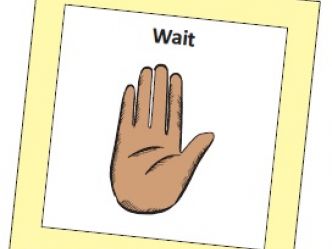
Many children with ASD, ADHD, SPD respond positively to schedule charts, sign posters, and other visual strategies. This form of information presentation encourages them to communicate appropriately and helps to develop language and process information. Thus, it helps them to be more independent and self-confident to verbalise or make other understand their own feelings.


Visual strategies can be purposeful for expressing and understanding feelings and emotions, while going through transitions or changes, visiting a new place or meeting a new person.

A visual schedule is a representation of what is going to happen throughout the day or within a task or activity. It helps in carrying out life skills activities or task in hand in a planned manner and reduces high levels of anxiety 

It encourages structure and organisation in daily routine.

It can be in form of timetables, behavioural sheets, safety charts, activity sequencing for self-care skills (example-tooth brushing) or independent living skills (driving, sex education), emotion’s chart, social skills, instructions or reminders.

Marlene J. Cohen and Donna Sloan are authors of book Visual Supports for People with Autism: A Guide for Parents and Professionals (2007) which highlights the significance of visual support strategies for children and adults with autism.

Children with ASD often display anxious behaviours or act out when their routines change or they are in unfamiliar situations. Visual reminders can support them understand what to expect and what will happen next to reduce the anxiety. They help them to pay attention to details and understand situation visually in a better manner.

One of the main problems of people having ASD is social interaction, using language and repetitive behaviours. They have difficulties understanding instructions and display limited interests in activities. A visual support system helps in countless areas helping the child to work systematically and rationally.

Finally, some children with ASD are anxious or act out when their routines change or they are in unfamiliar situations. Visuals can help them understand what to expect and will happen next and also reduce anxiety. Visuals can help them pay attention to important details and help them cope with change.


Often ASD children get anxious due to changes in routine, classroom schedule, while meeting new people, and in unfamiliar situations. Visual support strategies can help them understand what to expect and when will it happen. Rather than getting panicked, agitated, angry, and anxious these children can look into the picture cards, or visual charts and follow the plan.


Moreover, parents’ teachers can easily communicate with them using visual reminders. This decreases frustration and may help decrease problem behaviours that result from difficulty communicating. Visuals can promote appropriate, positive ways to communicate.

The visual schedule breaks down the activity into multiple steps so that child can understand, plan and execute the task easily and complete the task (e.g. life-skill, such as brushing, shoe lace tying) successfully with reduced anxiety levels. According to Zigmond et. al (1999), anxiety caused by any reasons can aggravate sensory defensiveness in children with sensory modulation difficulties. Therefore, to minimise the sensory issues, caused due to raised levels of anxiety and stress visual reminders can be a helpful tool to a great extent.

Furthermore, anxiety resulting due to lack of information or fear of unfounded apprehension results in concentration difficulties, restlessness, hyperactivity, distractibility as well as learning abilities.

The manifestation of anxiety has been found to be associated with complex brain structure, known as limbic system and components of the reticular system.
It is better to have a portable schedule such as on a clipboard or a   binder or it can be fixed to a permanent place such as child’s bedroom or washroom wall or refrigerator. 

Fundamentally, the schedule should be visible to a child frequently and easily so that he can access it before or while performing planned task. Initially, verbal cues such as “check your schedule” can be prompted if a child gets baffled to perform any task.


Resources for Using Visual Supports: 

www.do2learn.com 
card.ufl.edu/content/visual.html
www.kidaccess.com/index.html 
Eckenrode, L., Fennell, P., & Hearsey, K. (2004). Tasks Galore for the Real World. Raleigh, NC: Tasks Galore. 


References:

Autism Speaks (www.autismspeaks.org/)

National Autistic Society (http://www.autism.org.uk/)

Bernard-Opitz, V, and Häußler, A. (2011) Visual support for children with autism spectrum disorders: materials for visual learners. Shawnee Mission, Kansas: AAPC Publishing  Bondy, A. and Frost, L. (2011).

A picture’s worth: PECS and other visual communication strategies in autism. 2nd ed. Bethesda, Maryland: Woodbine House  Cohen, M.J. and Sloan, D. L. (2008) Visual supports for people with autism: a guide for parents and professionals. Bethesda, Maryland: Woodbine House


Saturday, 5 November 2016

Infant development: Birth to 3 months

An infant’s physical development is the source of pride and happiness. Each step of developmental milestone, from rolling to sitting followed with standing to walking brings child one step nearer to his own physical and mental independence.  As the child grows he becomes much more alert and responsive. Apart from sleeping, crying, taking the feed and filling diapers, he begins to move his body smoothly.

For infants’ motor development, various activities are manifestations of early development. By end of one and a half months, the child develops better coordination especially in getting the hand to his mouth and recognising mother’s touch. During this time baby’s brain generate millions of neurones every day causing body’s development at the phenomenal rate. He receives information through all the senses which help him to learn and grow.

During this period, he moves his head side to side while lying on his stomach. And keeps his fists tight. He may flop head backwards if unsupported since head and neck control are not yet achieved milestones. He explores his hands and brings them to the mouth for sucking. He uses different sensory systems such as vision, touch (tactile), auditory to explore the environment around them.

Primary reflexes like sucking and rooting are present since birth which help a child in taking mothers feed. In simple terms, these reflexes are already programmed in child’s brain system and assist him in breastfeeding. They are usually present for -4 months and then disappear and gradually feeding becomes voluntary control.

More reflex (Arms open outward on being tilted backwards) is commonly seen among children of 0-3 months. This reaction to reflex means that child’s balance and movement sense are developing well. Moreover, being able to hold head up when lying on tummy tells about functioning of the vestibular system (the sensory system responsible for maintaining our relationship with gravity). This sense gives us information where our head and body are in space. Due to this sense, the baby is able to roll, sit, stand and walk well.


Emotional Security has major role every newborn's life since it establishes expressive protection, trust and acquaintance with mother or caregiver. After delivery, child’s first bodily contact with his mother or caretaker has great influence on child’s body system for rest of his life. After contact, the brain should interpret ate the sensations correctly and appropriately in order to form the first emotional attachment. Sometimes, it is also called as mother-infant bond. This bond is essential for the physical and mental development of the baby. This bonding later helps in developing body image and body awareness. It also provides a sense of himself as the physical body. 


Tactile (Touch)The sense of touch relates to Tactile System. We (children and adults) are nourished, calmed and attached to mother or caregivers (bonding) through touch. This is considered as the first language of communication. An infant and mother completely depend on touch until language, cognitive skills are matured and other developmental milestones are not achieved.

The tactile system starts developing since 5th week of pregnancy, supports child to influence recognise different types of touch sensations as he grows. It has very important on newborn for the rest of his life. 

Functionally, this system supports in two important aspects, sucking and establishing emotional security. It comforts baby in sucking, chewing and swallowing food. Children who have difficulties in sucking may face challenges in eating different textures of food later in their lives.


Vision (Seeing)At birth babies, may look at highly contrasting targets, however, their abilities develop much later to distinguish between two images. Their primary focus is on objects 8-10 inches from their face. During the first-month child’s eyes work in conjugation and vision improves rapidly. Infants begin to follow moving objects with their eyes and reach to things at around 3 months. Sometimes their eyes may appear to cross or wander but this is normal since eye coordination is still not well developed.


Auditory (Hearing)A month-old child startles to loud sounds and smiles when spoken to. He responds to mother’s voice and quiets if crying. By this time, he may make pleasurable sounds such as cooing. As the child progresses to 2-4 months, he starts moving eyes in direction of sounds and responds to changes in voice tone of known people. He starts expressing displeasure and excitement. He may coo in response to face to face contact.


Gustatory and Olfactory (Taste and Smell)Babies orients to a smell of their mothers breastfeed. They display preference for pleasant smells and displeasure for pungent smells such as spoiled food


Activities for Development of Senses:

  • ·   Baby’s tummy time is essential as it helps in colic movement and helps core muscles to strengthen.
  • ·        Rocking, swaying and baby helps to promote vestibular sense.
  • ·        Post-delivery skin-to-skin contact is important.
  • ·        Daily massage and sponge play important role in child’s growth and development
  • ·        Maintain hygiene
  • ·        Talk to baby softly and gently.
  • ·        Keep the environment clean, and quiet to support his sleeping well.


Tuesday, 1 November 2016

What is A Sensory Diet?


A sensory diet is a carefully designed, personalised activity plan that provides sensory input to a child or adult who needs to stay focused and organised throughout the day (Occupational Therapist Patricia Wilbarger). It is developed by an Occupational Therapist specifically according to person’s sensory needs and abilities. It is developed to achieve particular goals considering child’s preferences, limitations, and available resources.


For example, a child having touch sensitivities will be given a sensory diet of activities which will have a calming effect since they support oversensitive children to decrease hypersensitivity towards sensory stimulation.Fast light- touch sensations increase arousal levels whereas slow sensations have calming effects (Schaaf and Roley, 2001).
Activities such as deep pressure massage, pushing-pulling, sucking hard candy or fruit, hand push-ups, rocking, swinging, running, obstacle courses are some of the generalised examples.


Heavy work (movement against resistance or weight) activities provide proprioceptive input. It helps to regulate arousal levels both the ways meaning in calming the child over-aroused child and stimulating the under-aroused child. 


Sensory Diet is similar to the nutritional diet of the human body. As food and water are basic requirements for body’s survival as well as functioning, similarly sensory diet is essential for reaching, maintaining and improving child’s ideal (optimal) level of alertness. The aim of sensory diet is to support the child in becoming more focused, organised, adaptable and skilful. It helps the child to perform a meaningful task in a successful manner.


A child with low arousal (under-aroused) levels needs alerting activities, whereas a child with high arousal (over-aroused) levels requires calming activities. Due to sensory reactivity or modulation issues, a child may have poor self-regulation and emotional regulation skills (Schaaf & Roley, 2001). Personalised sensory diet helps to improve attention span and concentration levels hence improving the quality of life and academic achievement.


According to the founder of Sensory Integration Approach, Dr A Jean Ayres (1972), the child should be actively engaged in activity or therapy session, and sensory experiences should be matched with a “just right” challenge that requires the child to give an adaptive response. For example, a child with hyperactivity and impulsivity can be given calming activities such as pushing the wheelbarrow or counted chair push ups as a movement break depending on his level of hyperactivity, age, and physique

                                                                  
Children with Autism, Attention Deficit Hyperactivity Disorder (ADHD), Developmental Coordination Disorder (DCD), Developmental Delay have difficulties in sensory integration and praxis deficits causing problems in reading writing, copying from the blackboard, listening and understanding instructions in the classroom. Minimal to moderate noise, an odour of different environmental objects, visual sensitivities towards fluorescent light are some of the examples that do not bother a typically developing child while working or sleeping. This happens since child’s body “tunes itself automatically” and gets adapted to environmental demands. However, in an atypically developing child “tuning” component does not work well, causing the child to struggle at each step and every moment since his body has to “tune itself manually” to get adapted to environmental demands.


Due to slow information processing, any instruction or command given will take the time to process the information and then respond. The child will answer correctly to what has been asked, however, it may take a little time and hence person has to be patient.


The purpose of the sensory diet is to provide sensory “tune ups” throughout the day so that child keeps on getting input needed for information processing correctly. The activities recommended in a plan should have long lasting effect on behaviour as diet is the group of alerting, organising and calming tasks.


The child with sensory integration dysfunction needs an individualised diet of tactile, vestibular, auditory and proprioceptive nourishment that means all the activities should be based on these three sensory systems. Careful planning is the key to perfect sensory diet.


  What is Sensory Integration?       


As first described by Ayres (1972), sensory integration is defined as “the organisation of sensory information for use” (p.1). It is a neurological process that enables us to make sense of our world by receiving, registering, modulating, organising, and interpreting information that comes to our brains from our senses.

Researchers and clinicians have explored many aspects of sensory integration in a variety of populations including typically developing children, children with learning disabilities, Autism, Aspergers, and attention deficit hyperactivity disorder (ADHD). 

Recently Ayres Sensory Integration© trademark denotes the adherence to the core principles of Ayres original theoretical framework. This copyright distinguishes it from other often applied clinical practices.  Mailloux, Roley, and Glennon (2007) have been working on Ayres Sensory Integration Fidelity tool which is correlated to trademark.


Occupational Therapist's Role in Planning Sensory Diet:


Sensory Diets are planned by Occupational Therapy practitioners who use sensory integration therapy for intervention purpose. They are mostly trained in Sensory Integration which enables them to work precisely with children and adults having mental health issues. Due to the better understanding of child’s sensory processing difficulties and requirements they can formulate reliable and achievable goals along with intervention strategies. All the activities are aimed at enhancing the child’s ability to participate in the day to day chores within the school, home and community.


Referral: Occupational therapist receives a referral from  GP,  SENCO/ head teacher depending on Borough as each borough has different systems.On getting the referral, OT  communicates to family and makes observations from SI point of view.
OT efforts to discover child's strengths and areas of weaknesses as he assesses sensory challenges (e.g.- touch, smell, vision, movement, hearing) and motor difficulties such as  poor body awareness, handwriting difficulties, right and left discrimination and then  plans  activities according to child’s needs and abilities on discussion with child, parents or caregivers following the client-centred approach.

Comprehensive Assessment : The assessment and information gathering involves taking histories, structured interviews. The main sensory integration assessment involves touch, movement, sight, hearing, smell, pressure, and taste. Along with these areas, behaviour, body awareness, motor coordination, learning in a classroom, attention, emotional liability is also assessed within different settings. 
Sensory Checklists: Occupational Therapists carry out clinical observations in structured and unstructured environments, follow sensory checklists and  use the standardised assessment tool called as Sensory Integration Praxis Test (SIPT), SPM, and Sensory Profile. The OT should be trained and certified to administer SIPT assessment.

Education: Educates child and family about sensory Diet plan and how it works.

Setting Goals and Outcome Identification: Therapist sets achievable, flexible and systematic goals for the child. He selects and schedules activities according to child’s abilities and deficits. Therapist set’s appropriate goals which are compatible with family’s beliefs, ethics and religion. They should work well within a family routine.

Activities Selection & Sensory Diet Planning: Activities are planned in correlation with goals. Mainly activities involving three sensory systems - tactile, vestibular, and proprioceptive are chosen since they are baseline systems for all behaviours. For example, child doesn’t like to be touched or hair washed, happens due to deficits in touch system, likes too much of movement or rocking happens due to deficits in vestibular system (sensory seekers), lacks body awareness, happens due to proprioceptive difficulties or is a picky eater happens due to oral hypersensitivities.So the activities are planned depending on sensory system deficits and careful planning is the key to sensory diet.

Follow-up: After a period of time therapist re-analyses effectiveness of intervention Plan. Activities are changed as the child able to accomplish the "just right" challenge. Activity modification and task gradation while measuring the outcome of the intervention is an important part of therapy plan. 


Video Description Credit: Unique Prints


Wednesday, 17 August 2016

Bridging the Gap: A Sensory Friendly Classroom


A classroom is an important practice environment where pupils improve their learning skills and develops a better understanding of life and the community. They get equipped with education to follow their future dreams, however, interference of sensory processing difficulties can hinder a child’s learning abilities and self-esteem to a great extent. 


At the same time inclusion of child within the school brings opportunity for teachers and members of staff to support one more child in becoming independent to her maximal potential, though, it also brings unseen responsibilities on class teacher to understand child holistically from diverse perspectives which may or may not be the part of academic teaching and learning process.


As an Occupational Therapist in a special needs school, I realised that educating and supporting teachers along with other members of staff, regarding the inclusion of Sensory Smart classrooms and related strategies is an indispensable part of my job role.


Often, teachers welcome sensory strategies and sensory integration tools within their classroom settings, suggested by Occupational Therapist in the first place, however feeling themselves ill-equipped to understand the appropriate utilisation of sensory tools, the sensory intervention is discarded or evaded very soon, considering as a waste of time or not their area to work in.


It is imperative for an occupational therapist to reassure, assist and collaborate with teachers in designing sensory-friendly classrooms and implementing sensory strategies among children. Educating and supporting the whole staff regarding sensory environment will aid in developing knowledge for sensory needs and behaviours are often seen among Autistic, ADHD, and Sensory Processing Disorder (SPD) children.

Modifying tasks and classroom environment can make significant changes in child’s learning potential and behavioural patterns. The classroom affords enormous amounts of sensory stimulation and distractions which lead to “sensory overload”. 

Halogen lights, front wall decorations, much written information on the white board, cluttered desks and surroundings, background noise or poor acoustics, children moving around are some of the physical environment factors that don't allow the child to concentrate well and pay attention to task in hand. Taking too much of information within can lead to flight, fright and freeze reactions.
These strategies can be recommended by school’s Occupational Therapist according to child’s primacies and requirements. Sensory Diet which is a personalised activity strategy plays a pivotal role in child’s academic achievement, learning, and positive behaviour. It should be planned in collaboration with class teachers to achieve the potential outcome from the sensory diet plan.

A child’s future depends on team collaboration, effort, and coordination within a learning institute. It will be injustice with the pupil and the parents who establish their trust in school system believing that their child is in right hands and being armed with best quality education, environment, and social ethics to face the challenging world and live a

OT recommended strategies for Sensory-friendly classroom.


Sensory Box:

It is a large container having different sensory items in it. These items support a child in being focused and engaged on given task, attentive and well-organised in his daily routine activities within the classroom. 

This is a smart concept to simplify lives of everyone (pupil, teacher and parents) which involves utilising different sensory resources that support child’s self-regulation, learning, positive behaviour resulting in increased self-esteem. For example, use of ear defenders helps to improve engagement and attention span on the task in hand within the classroom or home setting. 

It reduces various sources of auditory distractions (e.g., classroom noise, outside classroom voices, birds chirping, children shouting in the playground) that can be the potential threat to children as learning. 
These distractions will hardly bother anyone without Sensory difficulties, however, do have a great impact on the child with auditory hypersensitivity.


Sensory Diet:

It is a carefully designed, personalised activity plan that provides sensory input to a person needs to stay focused and organised throughout the day. It is developed by an Occupational Therapist specifically according to person’s sensory needs and abilities. It is developed to achieve particular goals considering child’s preferences, limitations and available resources. 

For example, a child having touch sensitivities will be given a sensory diet of activities having a calming effect such as deep pressure massage, heavy work, pushing-pulling, sucking frozen candy or fruit, hand push-ups, rocking, swinging, running, obstacle courses. Moreover, activities will be devised depending upon child’s choice and developmental age. 

Sensory Diet is similar to the nutritional diet of the human body. As food and water are basic requirements for body’s survival as well as functioning, likewise sensory diet is essential for reaching, maintaining and improving child’s ideal (optimal) level of alertness. The aim of sensory diet is to support the child in becoming more focused, organised, adaptable and skilful. It helps the child to perform a meaningful task in a successful manner.


Handwriting:

Children with handwriting difficulties should be given proprioceptive input
by utilising different positions, pen grip alternatives and related modifications. Here’s the link for handwriting strategies.


Homework Alternatives:

Provide homework printouts or give assignments in writing and not verbally. Most times it is better to post homework on school website so it is easier for parents and kids to understand the given assignments. Most of ADHD kids have difficulties in copying from whiteboard of blackboard due to distractibility and inattention to focus


Writing Slope:
  • Supports inappropriate writing.
  • Provides ergonomically correct posture, supporting hands and wrist.
  • Positions reading and writing text inappropriately.
  • Reduces strain on neck and shoulder muscles as a child leans forwards.
  • Aids in writing and holding tools correctly.


Movement Break Activities:
  • Star Jumps: These are good to involve whole body coordination.
  • Animal Walks: Walking like bear, elephant will improve body sense
  • Marching: This also involves coordination between both sides of the body, can be difficult. Initially start with feet marching, once mastered, then include arms.
  • Play Hopscotch: This will give distance and space judgement
  • Commando Crawling: Involving both hands and feet.
  • Body Paint: Ask the child to paint his particular body parts such as a right-hand or left-hand index finger.
  • Body Image: Ask a child to draw around his partner’s body on the large sheet and label body parts.


Colour coding:

It is best to colour code each and every subject and study material. For example, all maths folders, binders and handouts can be colour coded with red or green. Similarly, DT can be blue or yellow. This will help the child to organise and manage papers easily and conveniently. 

Moreover, it saves a lot of time and energy from being wasted which can be drained in locating one assignment sheet or revision paper. It is better to involve child when doing colour coding of the particular subject since he may have different perceptions about varying colours. 

Logically, colour coding gives visual stimulation and a clue to the brain regarding reference subjects.