Classrooms need to be Multisensory for better learning!!
A. Instructions should be simple, clear and short for the child to follow easily.
B. Be precise and slow while giving instructions. One step at a time since brain’s information processing is slow.
 |
| Fidgets |
C. Encourage the child to learn and practice the task. Practice! Practice! Practice makes a lot of difference.
D. Keep Fidgets handy! They reduce anxiety levels in different environments and facilitate attention on a task in hand. Use of different magnetic balls, paper clips, blue tac, or mechanical pencils can work well too. Other common fidgets can be giant nut and bolt, key chains, fidgeting fleece bags, finger squeezers, tactile balls (koosh ball): Resource:
E. Let child do heavy work activities such as jumping, chair push-ups, wall push-ups, clearing cluttered desk,carrying the heavy bag.
F. Give verbal instructions with visual demonstrations where ever possible. Showing child how to do activity is better than telling him about it. Demonstrate how to do the obstacle course and then let him perform.
 |
| Carrying heavy books has to calm effect |
G. Give extra time in the classroom to complete written work. Teachers need to have patience and calm!
H. Remove visual distractions from the classroom. All wall decorations, notices should go on the back wall. Whiteboard should be clear (except when teaching!) with a date in the corner.
I. Use colourful marker pens for teaching particular topic or concept.
J. Child should sit near to teacher’s desk and in front of a classroom.
K. Organise child’s desk, textbooks, supplies. Label different folders. This makes a lot of difference.
 |
| Supplies should be adequate |
L. Keep the supplies and textbooks in the good amount within a classroom.
M. Introduce and encourage calming music.
N. Let child submit written assignments rather than hand written since handwriting can be illegible or messy.
O. Labelling and Categorisation: Use sticky tags for labelling folders such as work done, work to be done, notices, to be read and other labels can be made according to requirements and relevance. It supports the child to distinguish and different folders and binders as well as subjects.
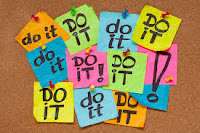 |
| Sticky Notes for Organisation & Labelling |
P. Lighting: Use of Halogen lighting system is considered better than fluorescent lighting system in classrooms.
Q. Homework Print Outs: It is better to post homework on school website so it is easier for parents and kids to understand the given assignments.
R. Visual Reminders: These can be in the form of picture posters, sticky notes, widgets or coloured writing on the board.
S. Sensory Diet: A sensory diet is a carefully designed, personalised activity plan that provides sensory input to a person needs to stay focused and organised throughout the day (Occupational Therapist Patricia Wilbarger). It is developed by an Occupational Therapist specifically according to person’s sensory needs and abilities
T. Movement Breaks: A child should be given a break for 2-3 minutes’ maximum. This for stress release and reassure that child can re-focus well on topic again. Doing deep Breathing or Stretching exercises can be beneficial. Going to an office to hand over paperwork is one example of movement break.
U. Pencil Grips: Children respond well to pencil grips as it improves handwriting, legible and provides tactile-proprioceptive feedback. Resource:
V. Wobble Cushions: Good for ADHD kids especially. Keeps good posture and maintains focus.Resource:
W. Ergonomics for Seating:
a. While sitting on chair hips, knees, and ankle should be perpendicular to each other.
b. Back should be straight and ninety-degree angle should form at an elbow.
c. Wrists should be in resting position.
d. Table and chair should have appropriate height.
e. The seat back should be angled at 15 degrees.
f. The child should lean forward with body weight supported by the floor with feet on the ground.
g. Provide slanting desk or tilt table desktop for achieving ideal reading and writing angles for vision and spine.
h. Elbow rests prevent straining of shoulders and neck muscles.
i. Reading angle should be about 60 degrees from horizontal.
j. Writing angle should be about 10-20 degrees.
X. Introduce Theraband Stretching exercises or Deep Breathing as a part of Daily morning routine to concentrate well in a classroom.
Y. Weighted Items: Use of appropriately weighted items should be done within the classroom on discussion with Occupational Therapist. Shoulder, Shoulder and neck weights, lap weights, wrist, ankle weights, snakey weights, weighted scarfs are weighted products for Calming down, reducing impulsivity, hyperactivity, and aggression. Resource


